
Most automation projects that die never fail technically; they fail in the budget meeting. A robot cell that would pay for itself in eighteen months still needs a six-figure purchase order on day one, and that is exactly where robot as a service (RaaS) changes the conversation. This guide explains how machine data turns robots into billable, financeable assets, and how to build the metering, pricing and leasing machinery behind a credible RaaS business model.
Key takeaways
- A RaaS business model only works when usage data is complete, timely and trusted by both parties; metering is a product feature, not an afterthought.
- Hybrid pricing (a minimum commitment plus usage-based pricing above it) usually balances the provider's capital risk with the customer's desire to pay for value.
- Utilization, cycle counts, uptime, faults and energy can be collected from industrial controllers through OPC UA, vendor interfaces or ROS, but they must be buffered at the edge and reconciled before they reach an invoice.
- Signed, tamper-evident metering makes disputes rare and short, and gives lenders the evidence they need for robot leasing and robotics financing.
- Start with one cell, one metric and one contract; add pricing complexity only after the pipeline has run cleanly for a full billing cycle.
The CAPEX barrier that keeps automation on the drawing board
A typical palletizing, machine-tending or pick-and-place cell is much more than a robot arm. An illustrative mid-size cell combines a 7 kg payload arm, an end-of-arm tool, a vision system, safety scanners, a conveyor interface, integration engineering and commissioning, and the arm is often less than half of the total project cost. Smaller manufacturers, contract packagers and logistics operators feel this most.
Buying committees raise the same three objections. Cash: the capital request competes with every other investment. Uncertainty: nobody knows real throughput until the cell runs on the customer's own parts. Obsolescence: if the product mix changes, an owned cell becomes a stranded asset.
Robot as a service addresses all three by converting a purchase into an operating expense that scales with use. But the moment you charge by the hour, the pick or the uptime percentage, you are running a utility, and utilities live or die by their meters. The hard part of RaaS is data engineering, not sales.
RaaS pricing models compared
There is no single RaaS business model. The right structure depends on how predictable the workload is, who controls the factors that drive throughput, and how much risk the provider or its financing partner can absorb.
| Model | How the customer pays | Pros | Cons | Data required |
|---|---|---|---|---|
| Fixed subscription | Flat monthly fee for cell, service and software | Simple to bill and forecast; easy to finance | Customer pays for idle time; weak value alignment | Uptime and SLA evidence, health monitoring |
| Pay-per-hour | Rate per productive operating hour | Intuitive for operations; tracks shift patterns | Disputes over what counts as "productive"; provider carries idle risk | Run-state timeline, auto/manual mode, alarms |
| Pay-per-pick / outcome | Rate per good part, pick, case or scan | Strongest value alignment | Throughput depends on factors the provider does not control; volatile revenue | Cycle counts, quality outcomes, reject reasons |
| Hybrid minimum + usage | Committed minimum including a usage allowance, plus overage per unit | Protects capital recovery while rewarding usage; preferred by lenders | More complex contracts; needs clean reconciliation | All of the above, aggregated per period |
In practice, the hybrid model is the workhorse of robotics financing. The minimum covers depreciation and cost of capital, which is what a lender cares about, while the usage component gives the customer a genuine pay-for-what-you-use story and gives the provider upside when the cell performs.
What usage data you need and how to collect it from controllers
Usage-based pricing and data-driven leasing draw on the same signals but use them differently: billing needs exact, period-bounded counts, while financing needs trends and risk indicators over the asset's life.
Core metering signals
- Utilization: time in each state (automatic, idle, manual/teach, faulted, off), derived from controller state changes rather than periodic snapshots.
- Cycle counts: a monotonic counter incremented by the robot program at the end of each successful cycle, so gaps are detectable.
- Uptime and availability: measured against the scheduled production window, which is what most SLAs reference.
- Faults and alarms: error codes, timestamps and recovery time, which separate provider-caused downtime from customer-caused stoppages.
- Energy: per-cell kWh from a power meter or drive data, for sustainability reporting or pass-through costs.
For underwriting, add joint torque and temperature trends, cumulative axis travel, gearbox and brake diagnostics where available, and maintenance events.
OPC UA, vendor interfaces and ROS
OPC UA is the most vendor-neutral option on the factory floor. Many robot controllers and PLCs offer an OPC UA server, built in or as a licensed option, and the OPC UA for Robotics companion specification defines a common model for motion devices, including operational state. Use subscriptions with monitored items rather than polling, so state changes arrive as events with server timestamps.
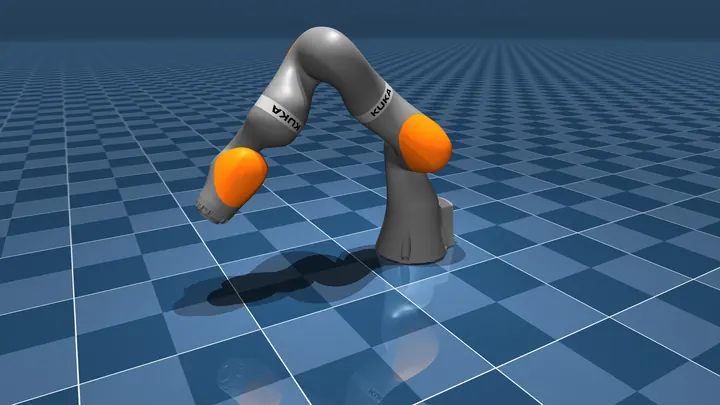
Vendor interfaces often expose richer data. Universal Robots controllers provide the Real-Time Data Exchange (RTDE) interface for high-rate joint and I/O data and a Dashboard Server for program and safety state. KUKA and Mitsubishi Electric controllers offer their own Ethernet interfaces and options for external data access, and Boston Dynamics Spot exposes state, power and faults through the Spot SDK. Mobile robots running ROS 2 can be metered with a node that subscribes to diagnostics, battery and task-completion topics; if you already record bags, see our guide to ROS 2 data logging with rosbag2 and MCAP.
Edge buffering and normalization
Run the collector on an edge device next to the cell, not in the cloud. A lost hour of data is lost revenue or an unprovable SLA. The edge agent should write events to a durable local queue, assign a monotonic sequence number, and forward when connectivity returns. A normalized event can be as simple as this:
{
  "asset_id": "cell-07-rv7frl",
  "seq": 184223,
  "type": "cycle_completed",
  "ts": "2026-09-14T08:41:17.203Z",
  "source": "opcua:ns=4;s=Program.CycleCounter",
  "counter_value": 1048813,
  "program": "PACK_CASE_12",
  "state": "AUTO"
}
The MerkleBot Agent does this on the robot or edge gateway, with pre-built data pipelines for ROS and ROS 2, KUKA, Mitsubishi Electric, Universal Robots and Spot, so the metering schema is the same whether the asset is an arm, a mobile robot or an IoT device.
Making usage data trustworthy enough to invoice
Once usage data drives money, both sides have reason to question it. A customer may suspect inflated counts; a provider may suspect the robot was disconnected during a busy week. Design metering the way payment systems are designed: tamper-evident, reconcilable and explainable.
Signed, tamper-evident metering
- Sign at the source with a device key held in a TPM or secure element where available.
- Chain the batches: each batch includes the hash of the previous one, so deletions or reordering are detectable.
- Anchor periodically by publishing a Merkle root of each day's events to an append-only log. Our article on Merkle trees for verifiable machine data explains how one root proves any event's inclusion without exposing the whole dataset.
Reconciliation before invoicing
Never bill directly from a raw stream. At period close, compare the sum of cycle events, the difference between first and last controller counter values, and the expected sequence range. If they disagree, hold the invoice and classify the gap.
def reconcile(events, counter_start, counter_end, seq_start, seq_end, tolerance=0.002):
    counted = sum(1 for e in events if e["type"] == "cycle_completed")
    controller = counter_end - counter_start
    seq_gaps = (seq_end - seq_start + 1) - len({e["seq"] for e in events})
    drift = abs(counted - controller) / max(controller, 1)
    if counter_end < counter_start:
        return "HOLD: counter reset detected"
    if seq_gaps > 0 and drift > tolerance:
        return f"HOLD: {seq_gaps} missing events, drift {drift:.2%}"
    return {"billable_cycles": controller, "event_cycles": counted, "status": "OK"}
The controller's own counter is the billing source of truth, and the event stream is the evidence that explains it. That keeps invoices stable even when individual events arrive late.
Handling disputes
Give customers the same view you bill from: daily counts, state timelines and fault periods, plus a defined dispute window such as 15 days after invoice. Agree in advance how gaps are estimated, typically from the average rate of surrounding shifts. When evidence is shared and signed, most disputes become a five-minute conversation.
Data-driven robot leasing and the Smart Lease case study
Traditional equipment leasing prices risk from the customer's balance sheet and a generic residual value curve. Data-driven leasing adds what the asset is actually doing:
- Residual value: a robot that ran 2,000 hours a year at moderate payload is worth more at term end than one that ran 6,000 hours near its limits. Hours, axis travel and maintenance history let the lessor estimate residuals per asset, not per model.
- Utilization risk: falling utilization is often the earliest sign of trouble, well before a missed payment. Trigger outreach when, for example, the 30-day average falls below 60% of the contracted baseline.
- Remote monitoring: knowing that an asset is powered, healthy and where it should be lowers recovery risk, which can translate into better terms.
- Portfolio view: pooled data across leases lets financiers price new deals on observed performance.
Case study: Southie Autonomy Works
MerkleBot's Smart Lease program was built around robot-as-a-service financing driven by machine data. The financing software integrates directly with the robot and works with almost any industrial robot, and the business model is aligned so that MerkleBot gets paid when the client gets paid.
Southie Autonomy Works, which builds no-code AI robot deployment software, needed an industrial arm for a contract-packaging automation project. Through Smart Lease it obtained a Mitsubishi Electric RV-7FRL industrial arm with no upfront CAPEX, on a flexible as-a-service payment plan. The capital purchase no longer stood between the project and its customer.
The lesson: direct integration with the robot is what makes this financing possible; otherwise usage-linked terms rely on self-reported numbers. Read more on the Smart Lease service page.
Illustrative unit economics of a RaaS cell
The numbers below are an illustrative estimate to show the mechanics, not a quote or market benchmark.
| Assumption | Illustrative value |
|---|---|
| All-in cell cost (arm, tooling, vision, safety, integration) | $120,000 |
| Contract term | 36 months |
| Provider cost of capital | 10% per year |
| Expected residual value at term end | 20% ($24,000) |
| Service, monitoring and software cost to provider | $600 per month |
| Expected throughput | 200,000 picks per month (two shifts) |
| Customer labor cost avoided | $7,000 per month |
Monthly fee calculation
The capital component is an annuity on the cost minus the present value of the residual. At 0.833% per month, the residual's present value is about $17,800, leaving roughly $102,200 to recover. The 36-month payment factor is about 0.0323, so capital recovery is approximately $3,300 per month. Adding $600 of service cost and about $500 of margin gives a target average revenue of roughly $4,400 per month.
As a hybrid contract, that becomes a $3,400 monthly minimum including 150,000 picks, plus $0.02 per pick above the allowance. At 200,000 picks the invoice is $3,400 + 50,000 × $0.02 = $4,400. If volume drops, the minimum still covers the capital; if it rises, both sides benefit.
Payback period from both sides
- Customer buying outright: $120,000 / $7,000 ≈ 17 months to payback, after finding the capital.
- Customer on RaaS: a net saving of about $2,600 per month from month one, with no capital request.
- Provider: $120,000 / ($4,400 − $600) ≈ 32 months to recover the hardware from cash flow, with residual value and renewal as the return. That is why the utilization data that protects both matters so much.
Integrating metering with payments and invoicing
The robust pattern is: edge events, then a reconciled daily aggregate, then usage records pushed to the billing platform, then invoices generated at period close.
- Aggregate daily and push one usage record per asset per day with an idempotency key such as
asset_id:date:metric, so retries never double-bill. - Use webhooks both ways: your platform emits
usage.reconciledorusage.held; the billing system emitsinvoice.finalizedandpayment.failedto trigger account workflows. - Attach evidence by storing the Merkle root or report hash in invoice line-item metadata.
- Connect financiers to the same reconciled records through an API rather than spreadsheets.
{
  "event": "usage.reconciled",
  "asset_id": "cell-07-rv7frl",
  "period": "2026-09-14",
  "metric": "picks",
  "quantity": 9412,
  "idempotency_key": "cell-07-rv7frl:2026-09-14:picks",
  "evidence_root": "b3f1c0...e91a"
}
MerkleBot connects to third-party monitoring, analytics, payments and financing services, so one data feed serves both operations dashboards and invoicing. The developer documentation covers the REST API and webhook model.
Contracts, SLAs, launch plan and KPIs
Contract and SLA checklist
- Billable unit: exactly which counter or event, from which system, constitutes a unit.
- Availability SLA: measured over scheduled hours, excluding customer-caused stoppages identified by fault category, such as upstream starvation.
- Data gaps: how missing periods are estimated and the maximum gap before the period bills at the minimum.
- Data ownership: who owns operational data, permitted uses and retention.
- Service credits as a percentage of the minimum when availability misses target.
- End of term: return, renew or buy out at a residual linked to measured usage.
Step-by-step launch plan
- Pick a pilot cell with stable demand and a cooperative customer.
- Choose one billable metric and confirm the controller exposes it.
- Deploy the edge agent with buffering and signed batches; test a deliberate network outage.
- Shadow-bill for one full cycle and compare against manual counts.
- Write the contract using definitions proven in shadow billing.
- Connect billing and financing through usage records and webhooks.
- Go live, review the first three invoices jointly, then templatize for the next site.
KPIs that matter
- Metering completeness: share of expected events received within 24 hours (target above 99.5%).
- Reconciliation pass rate: asset-periods closed without manual intervention.
- Utilization vs. baseline by asset and cohort, the leading indicator for revenue and credit risk.
- Availability against SLA, service credits issued, and dispute rate.
- Gross margin per asset-month, renewal rate, and realized vs. forecast residual value.
Frequently asked questions
What is the difference between robot leasing and robot as a service?
A lease finances the hardware on a fixed schedule, and the customer usually handles operation and maintenance. Robot as a service bundles hardware, software, support and often performance commitments, with payments that may vary with usage. Data-driven leasing sits between the two, using machine data to shape terms and monitor the asset.
Which pricing model should a first RaaS offer use?
For most providers, a hybrid of a monthly minimum plus usage above an allowance. The minimum protects capital recovery and eases financing; the usage component aligns cost with value.
Can older robots be metered for usage-based pricing?
Usually. Without OPC UA or a modern SDK, cycle counts can often be read via PLC I/O, a fieldbus gateway or a program variable on the vendor's Ethernet interface. What matters is a reliable counter and an edge device to buffer data.
How do you stop customers disputing usage invoices?
Bill from the controller counter, sign and chain events at the edge, reconcile before invoicing, and share the same evidence with the customer, with gap-estimation rules and a dispute window agreed in the contract.
Does robotics financing require sharing production data with a lender?
Lenders typically need aggregated utilization, uptime and asset health, not process details or video. Scope the shared data in the contract and expose only reconciled aggregates.
Conclusion: the meter is the business model
Robot as a service turns the CAPEX barrier into a monthly decision, but only if usage is measured in a way both sides trust. Collect state, cycles, faults and energy at the edge; sign, chain and reconcile them; and connect the result to billing and financing through idempotent usage records. Do that well and pricing becomes a commercial choice rather than a technical constraint, and robot leasing becomes underwriting based on evidence. Explore the MerkleBot platform to see how fleet data flows from controller to invoice.
Planning a RaaS offer or usage-based financing program? Book a 30-minute demo and we will walk through metering, reconciliation and Smart Lease for your robots.